A Traditional Vedanta Ashram
Arsha Vidya Gurukulam
A residential home for the traditional study of Advaita Vedanta, Sanskrit, Yoga, and Ayurveda in the Pocono foothills.
A place of residential learning
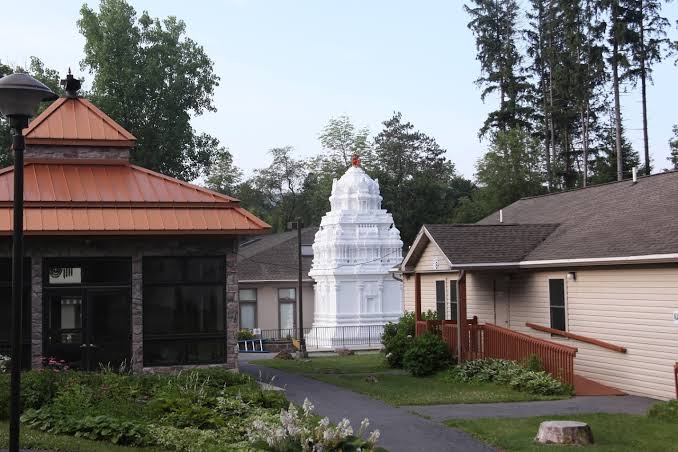
Since it was established in 1986, Arsha Vidya Gurukulam has offered a quiet, academic-like setting for the study of Advaita Vedanta, Sanskrit, and the Vedas, alongside yoga, meditation, ayurveda, and astrology. The name itself carries the idea: Arsha Vidya is the knowledge of the rishis, and a gurukulam is the traditional home of residential study, where a student lives close to the teacher for the length of the course.
The ashram welcomes both long-term Vedanta students and day visitors who come for temple worship, weekend classes, and seasonal camps. Registration ahead of arrival is requested so the office can prepare for guests properly.
Vedanta is the knowledge that resolves the human problem and frees a person from samsara — so no fee is asked for the teaching, and no other condition stands between a student and it.
— from the teaching of Pujya Swami Dayananda Saraswati
Upcoming Events
Bhagavadgita Weekend Classes (1st & 3rd Sunday)
November 15, 2026
Pradosha Kala Puja
November 22, 2026 at 5:15 pm – 6:15 pm
Thanksgiving Family Vedanta Camp
November 26 – November 29, 2026
<p class="p1"><b>Swami Muktatmananda</b></p>
<p class="p2">Hinduism and Family Life The Vedas, which are the basic texts of Hinduism, give great importance to family life. According to the Vedic vision, the Vedic family is designed in such a way that it can fulfill all human aspirations. While family life will help in the fulfillment of all goals, it will transform a human being also, so that he or she can attain the highest goal of <i>mokṣa</i>, freedom.</p>
<p class="p2"><b>Swami Sachidananda</b></p>
<p class="p3">Prātaḥsmaraṇastotram - Three Verses on Reality Prātaḥsmaraṇastotram is a short, beautiful set of three verses meant to be remembered at the start of the day. They gently turn the mind toward what is truly real—the Self, which is whole, and untouched even as life keeps changing externally.</p>
Bhagavadgita Weekend Classes (1st & 3rd Sunday)
December 6, 2026
Pradosha Kala Puja
December 6, 2026 at 5:15 pm – 6:15 pm
On the gesture of Dakshinamurti
Three fingers of the raised hand stand for the body, the mind, and the senses — the gross, subtle, and causal frames a person mistakes for the self. The thumb stands apart, representing the Lord, yet the fingers have no strength without it. When thumb and fingers close into a circle, the gesture teaches tat tvam asi — “you are that” — that the one who takes himself for body and mind is, in truth, the whole, complete as a circle with no beginning or end.